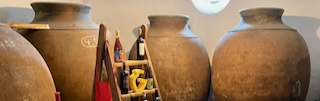

The origins of wine: where it all began
Georgia is generally regarded as the world's oldest wine-producing country. The earliest known archaeological evidence of true grape wine comes from the southern Caucasus, at sites such as Gadachrili Gora and Shulaveri Gora, south of Tbilisi. Traces of wine have been found there in earthenware vessels dating from around 6000 BC — making them approximately 8,000 years old. This tradition is also often associated with the origins of orange wine.
Orange wine is essentially a white wine made in the same way as red wine: the white grapes ferment with their skins, giving the wine an orange to amber colour, along with more tannins, structure and spicy aromas than a conventional white wine. This method is therefore ancient: winemakers ferment the grapes with their skins and pips.
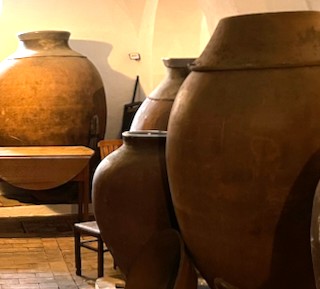
Earthenware vessels used to make wine
In short, according to the current evidence, winemaking originated in Georgia, in the Caucasus. Even older fermented drinks did exist elsewhere, for example in China, but these were mixtures of rice, honey and fruit — not pure grape wine as found in Georgia.
This traditional approach can once again be seen today among wine producers who make wine using methods that are as artisanal as possible, fermenting the grapes in earthenware vessels.